Moisture, Mold & Air Quality.
Most mold problems are really moisture problems. Here’s what we look for, where water sneaks in, and how to keep your indoor air healthy.
What we check during an inspection
We look for moisture and its sources throughout the home. (Lab mold testing is a separate specialist service.)
✓ Water staining
Ceilings, walls, and areas around plumbing for active or past water damage.
✓ Leaks & condensation
Plumbing leaks and the cold surfaces where condensation tends to form.
✓ Ventilation
Whether bath and kitchen exhaust fans actually vent to the exterior.
✓ Below-grade humidity
Basement and crawlspace dampness and the presence of a vapor barrier.
✓ Visible growth
We note suspected mold-like growth; identification/testing is a specialist service.
✓ Intrusion sources
Roof, window, and grading issues that let water in.
Common problems we find
✓ Fans venting into the attic
Bath fans that dump humid air into the attic instead of outside — a frequent mold cause.
✓ Chronic below-grade damp
Basements and crawlspaces that stay humid, often with no vapor barrier.
✓ Hidden leaks
Slow leaks behind walls or under sinks quietly feeding mold growth.
✓ High indoor humidity
Condensation on windows and cold surfaces pointing to too much moisture.
✓ Grading sources
Poor drainage wetting the foundation and migrating inside.
✓ Incomplete dry-outs
Past water damage that was never fully dried.
What you can maintain yourself
✓ Use your exhaust fans
Run bath and kitchen fans, and confirm they vent outdoors — not into the attic.
✓ Control humidity
Aim for roughly 30–50% indoor humidity; dehumidify damp basements.
✓ Dry spills fast
Fix leaks immediately and dry wet materials within 24–48 hours.
✓ Keep water outside
Maintain grading and gutters so water stays away from the home.
✓ Cover the crawlspace soil
Add or repair a vapor barrier to cut ground moisture.
✓ Call a pro for growth
Visible mold or a persistent musty smell warrants a remediation or IAQ professional.
Moisture in a dry climate — the twist
Colorado is dry, which lulls people. The moisture problems we find here are concentrated, seasonal, and often hidden.
✓ Dry outside, damp below
Ambient dryness masks below-grade problems: spring snowmelt and summer cloudbursts drive water at foundations in pulses. A basement that’s bone dry in January can seep every May.
✓ Swamp coolers add water
Evaporative coolers deliberately humidify — great for comfort, but ducts and pads left wet at season’s end grow the mold we get called about in fall.
✓ Winter condensation
When it’s 5°F outside, any indoor humidity finds cold corners, window frames, and closet exterior walls. Over-humidified tight homes grow mold in a “dry” state.
✓ Hail-hole leaks masquerade
A surprising share of “mysterious” ceiling stains trace to storm-damaged roofs and vents. After hail season, moisture readings around penetrations tell the story.
Common questions
Does dry Colorado air mean I don’t have to worry about mold?
No — it means mold problems here are localized instead of climate-wide. Everything mold needs shows up in specific spots: below-grade dampness, bathrooms venting into attics, swamp-cooler ducts, window condensation in winter. Those concentrated zones grow mold in Colorado just as happily as a humid state’s whole house.
What indoor humidity should I keep in winter?
Roughly 30–40% in cold weather. Above that, warm moist air condenses on cold windows and wall corners and feeds mold; below ~25% you get static, nosebleeds, and shrinking wood. If windows drip every morning, turn the humidifier down — the glass is telling you the walls are wet somewhere too.
My bathroom fan vents into the attic — is that really a problem?
Yes, and it’s one of the most common defects we report. A shower’s worth of humid air pumped at cold roof sheathing condenses and grows mold on the underside of the roof deck. The fix is modest — ducting the fan to a roof or gable termination — and far cheaper than attic mold remediation.
Is the musty smell in my basement mold?
A persistent musty odor is moisture until proven otherwise, and usually microbial growth somewhere — carpet pad, the base of drywall, stored cardboard. Track humidity (a $15 hygrometer helps; over ~55% sustained is too high), find the water source, and fix that first. Dehumidifiers manage symptoms; drainage fixes causes.
When is professional mold testing worth it?
When there’s a health concern, a real-estate decision, visible growth over about 10 square feet, or a smell with no findable source. Testing without a moisture investigation is the mistake — the lab report doesn’t fix anything. Our mold assessments pair sampling with finding the water, which is the part that actually matters.
This guide is for general education. It reflects what we look for during a home inspection, not a substitute for a licensed professional. If you have a specific concern, please contact a mold or indoor-air-quality professional — and of course, we’re always happy to take a look during an inspection.
More from our guides
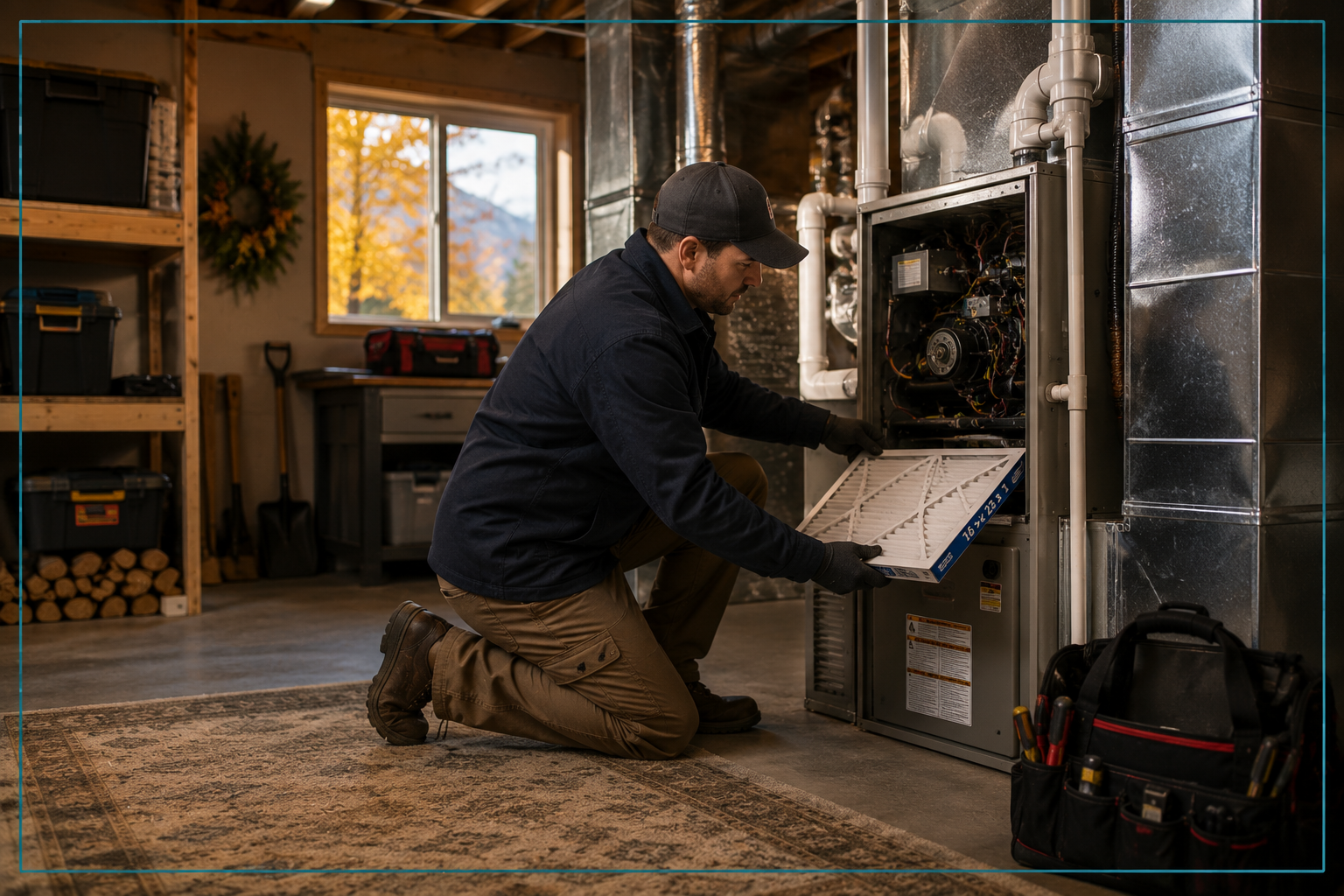
Home Maintenance, Season by Season
A spring-through-winter checklist tuned for Front Range homes.
Read →Radon in Colorado
Why half of Colorado homes test high, county-by-county numbers, and what testing and mitigation really cost — with sources.
Read →Plumbing
Plumbing issues are some of the most common — and most expensive — problems we find. Here’s what we actually look at during an inspection, what tends to go wrong, and what you can stay ahead of yourself.
Read →Concerned about your moisture, mold & air quality?
We’ll give your home a thorough, plain-English inspection and flag anything worth a closer look.